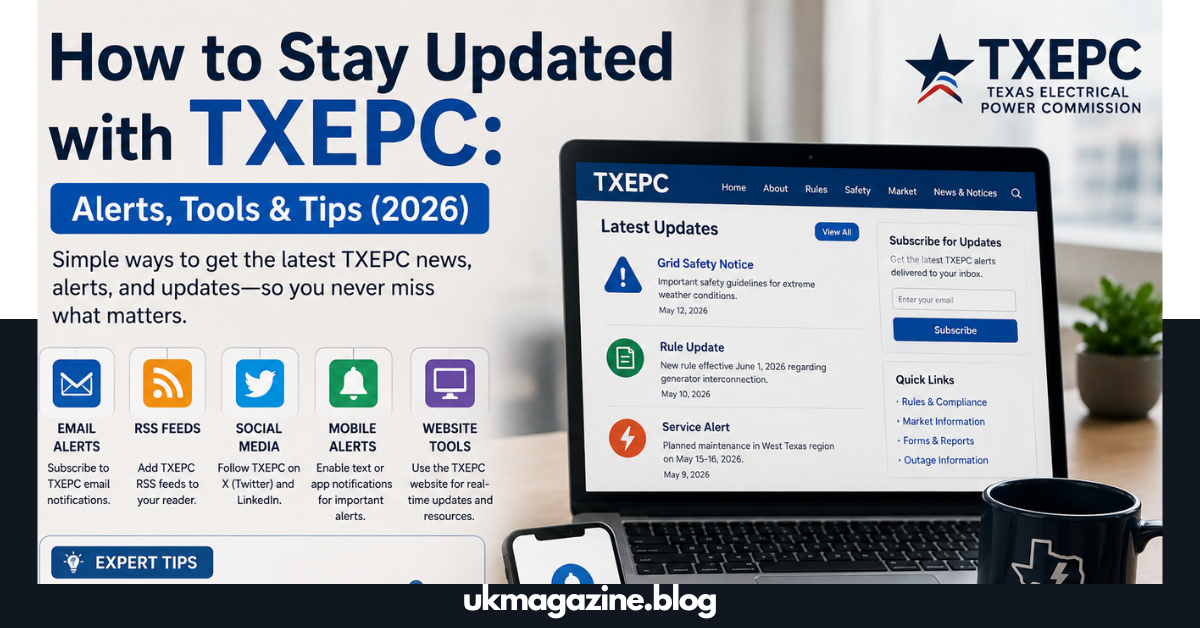
Staying informed with TXEPC is crucial. TXEPC (Texas Electrical Power Commission) issues rules, safety notices, and service updates for the power and utilities sector. Individuals and businesses track TXEPC for policy changes, compliance guidelines, and outage alerts. If you work in energy or utilities, you know that missing a TXEPC update can mean delays, fines, or extra costs. To avoid trouble, it pays to stay updated with TXEPC. This guide shows simple, practical steps to get timely alerts, subscribe to official channels, and use smart tools. You’ll learn easy routines and tips that anyone can follow, so you never miss important TXEPC information again.
Why Staying Updated with TXEPC Matters
TXEPC posts urgent updates about regulations, outages, and safety. Keeping up helps you act fast when rules change. For example, electric companies and contractors rely on TXEPC releases for permit changes and inspection rules. A missed TXEPC notice could delay a project or cause compliance lapses. Readers who stay updated with TXEPC save time and reduce risk. As one guide notes, organizations need “current facts to act fast” because TXEPC updates can appear on uneven schedules. In short, following TXEPC closely keeps your operations smooth and your plans on track. Even if you think an update is routine, it might alert you to a tool, trend, or rule change that matters later on.
Official TXEPC Update Channels
The first step is to use TXEPC’s official sources. TXEPC usually publishes notices on its website and through legal bulletins. By law, some TXEPC announcements also go to the Texas Register. Big changes may come as press releases. In practice, check the TXEPC website daily for updates, agendas, and final orders. Bookmark the homepage and key section pages so you can reach them quickly. Libraries and legal archives may also mirror major TXEPC notices over time, but don’t rely on them first. The best approach is to subscribe to official feeds or use built-in alerts on the site. Doing this ensures you hear it from the source. As one expert guide explains, “TXEPC posts official notices on its website and on a public bulletin” and you should check those or subscribe to avoid missed news.
Subscribe to Email Alerts and Newsletters
Email is one of the easiest ways to stay updated with TXEPC. Many agencies let you sign up for newsletters or alert emails. Look for a newsletter or subscription form on the TXEPC site. Enter your email and confirm any messages. Choose topics or categories of interest if prompted. Once set up, TXEPC will send new notices straight to your inbox. This way, you don’t have to check the website manually. We recommend using an email account you check often, and create a folder just for TXEPC updates. That keeps important notices from getting lost with spam. Checking your email (and spam folder) regularly means you’ll catch TXEPC updates fast. Remember to whitelist the TXEPC address to avoid missing alerts. With email alerts, you can even read updates offline or forward them to your team. This simple setup is powerful: updates go directly to you on time.
Set Up RSS Feeds and Alert Tools
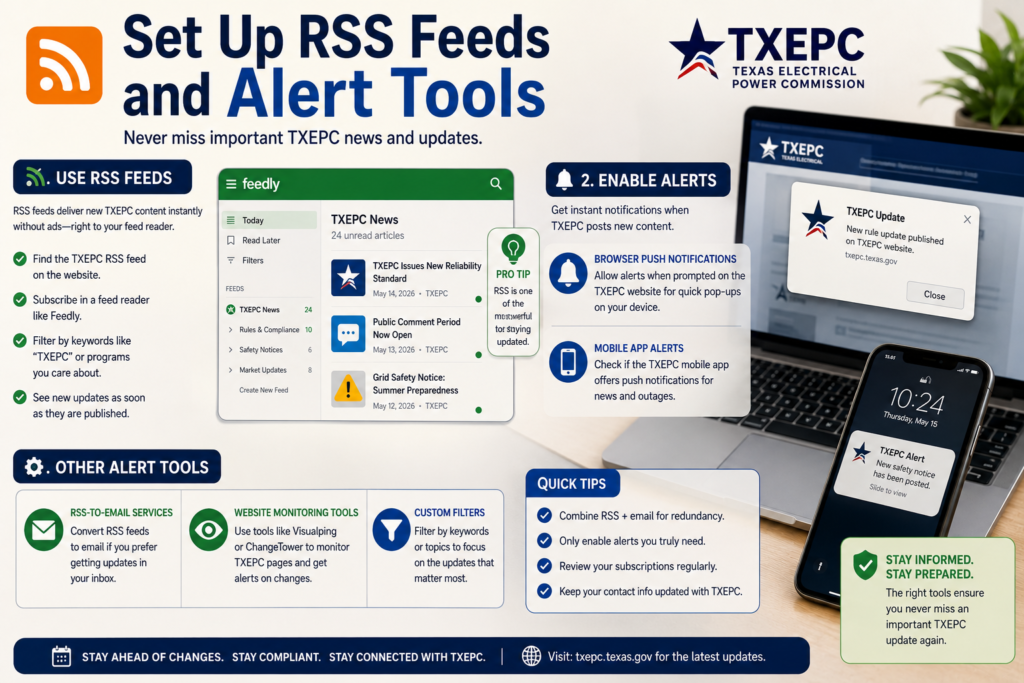
RSS feeds are another powerful way to never miss TXEPC news. If the TXEPC site offers an RSS feed, use a feed reader (like Feedly) to subscribe. RSS delivers new content instantly without ads. You can filter by keywords if your reader supports it. For example, filter for “TXEPC” or specific programs to focus on alerts you care about. This ensures you see each update as soon as TXEPC posts it. Many guides call RSS “one of the most powerful tools for staying updated”. It works even if you miss an email – combining RSS and email gives redundancy.
Other alert tools can help too. Some websites let you enable browser or mobile push notifications. If TXEPC prompts you to allow browser alerts, consider it: you’ll get a small pop-up when new content appears. This can be quicker than email, since it shows up right away on your device. Just be careful not to overload yourself with alerts—only enable them for the channels you really need. If you prefer not to allow pop-ups, you could use an RSS-to-email service or a site-monitoring tool (see below).
Follow TXEPC on Social Media
Official social channels are useful for quick headlines and links. Many organizations post important announcements on platforms like LinkedIn, X (Twitter), or Facebook. Check if TXEPC has verified social accounts or pages. Follow or “like” them to see alerts in your newsfeed. Turn on notifications for those accounts if possible. Social media tends to push out short notices and event reminders before or along with email releases. It’s a great way to get early signals. For example, a brief tweet or LinkedIn post might alert you to a new rule draft or an upcoming hearing. Then you can click through to the website for full details. As one tip suggests, following TXEPC on LinkedIn, Twitter, and Facebook “can significantly improve your awareness of updates”.
Just remember: whenever you see a social update about TXEPC, always verify it against the official site or Texas Register. Social posts are quick but sometimes incomplete. Use social media as a supplement, not your only source. If in doubt, check the full release on TXEPC’s pages or ask the contact listed in the notice.
Create a Daily TXEPC Routine
Having a routine makes staying updated easy. You don’t need to spend hours each day—just a quick check-in. For example, set a daily calendar reminder: “Check TXEPC at 9 AM.” Each time, open the homepage first and scan any new headlines. Then look at the sections (like Digital Home, Tech, or official notices) that matter to you. Reading titles first saves time: open only the articles or notices that seem important.
One good habit is assigning roles if you’re in a team: have one person be the “TXEPC reviewer” each day. They quickly read any new posts and decide if action is needed. They can then summarize key points and share them. This way, the whole team stays in the loop without everyone having to read each notice. A similar tip is to use checklists and logs. For each new TXEPC update, note the date, title, required action, and who is responsible. Keep this change-log board visible to the team. Update it as tasks get done. This clear record helps track progress and makes audits easier.
Best Tools and Practices to Use
Combine tools for safety and speed. Here are some recommendations:
- RSS Readers: Use a reader that supports filters or keyword alerts. Add TXEPC feeds and filter for high-priority terms. This pulls updates in real time with no ads.
- Email Filters: Set up a special folder or label for TXEPC emails. This keeps alerts organized. You can even create filters that tag or forward important alerts.
- Team Chat (Slack/Teams): If you work in a group, make a dedicated channel for TXEPC updates. Configure an RSS-to-Slack integration or have the reviewer post summaries there. Pin key messages so the info is easy to find later.
- Monitoring Services: Tools like Visualping or ChangeTower can watch TXEPC web pages (e.g. press release page or rules list) and notify you on any change. This is useful if no RSS is available. These monitors give near-instant alerts when the page content changes.
- Internal Calendar: Block a short daily check (10 minutes) and a weekly review (30 minutes) on your calendar for TXEPC. This makes the routine automatic.
Also, verify before you act. When you get an alert, always confirm the details on the official TXEPC site. If in doubt, follow any contact info in the notice. Consider staged rollouts for any major change: test in a sandbox before full implementation. These checks prevent mistakes.
Finally, keep your contact info up to date. The guide suggests running a monthly review of your subscriptions and list of contacts. That way, if email addresses change or someone leaves the team, you won’t miss alerts due to outdated info. A quick pass every month or quarter ensures your update system keeps working.
Common Mistakes to Avoid
- Relying on a single source. Some people only check email or only refresh the website. This is risky. Use at least two channels (like email + RSS or social) so you catch everything.
- Ignoring notifications. When the site asks to enable push alerts or your browser warns about notifications, don’t dismiss it without consideration. Properly managing permissions means you won’t miss critical pop-ups.
- Subscribing unofficially. Only sign up on TXEPC’s own website. Avoid unknown third-party services claiming to provide TXEPC news. Stick to official channels for security and accuracy.
- Not checking the spam folder. Emails can land in junk. Regularly check or whitelist TXEPC alerts in your email system.
- Ignoring small updates. Sometimes TXEPC posts routine or minor changes. Even these can include useful info. Skipping them can allow small issues to accumulate. At least glance at each update title to see if it’s relevant.
- Overloading yourself. Enabling too many notifications (like every category or site) can lead to alert fatigue. Only subscribe to topics or channels you really need. Quality over quantity makes your alerts meaningful.
By avoiding these pitfalls and combining methods, you’ll build a strong “staying updated” strategy that’s robust and reliable.
FAQs
A: TXEPC stands for Texas Electrical Power Commission (as an example). It issues rules, safety notices, and regulatory updates for the Texas energy sector. If you work in utilities, construction, engineering, or related fields, TXEPC updates often affect your work. For instance, TXEPC releases can change permit requirements or set new safety deadlines. Following TXEPC news keeps you ahead of these changes. In short, TXEPC updates contain official guidance; ignoring them can cause fines or delays.
A: Check the TXEPC website for a “Subscribe” or “Alerts” section. Often you can enter your email for newsletters or alerts. For example, find the newsletter signup form on TXEPC’s homepage. Enter your email, choose topics if asked, and confirm via the link sent to your inbox. You should also look for RSS links on the site and add them to your reader. These methods deliver updates directly to you without manual checking. It’s safe as long as you sign up on the official site and avoid unverified third-party services.
A: Social media is useful but not foolproof. TXEPC’s official accounts (if any) on Twitter/X, LinkedIn, Facebook, etc., often post quick announcements and links. Following them gives you early alerts. However, always double-check with the official TXEPC site or Texas Register before acting, since social posts may skip details. Use social media as an additional channel. For example, a Twitter alert about a meeting can cue you to read the full notice on the TXEPC site.
A: This can happen if you rely on one method. The solution is to use multiple channels in tandem. If you missed an email, you might catch the news via RSS or a Slack alert. Setting up backup alerts is key: as one tip advises, “use multiple methods for redundancy”. Also, most TXEPC notices have deadlines. If a deadline is very close, confirm the information with TXEPC or colleagues as soon as possible. In practice, having at least two alert systems and one person responsible ensures that missing one alert doesn’t derail you.
A: TXEPC updates can come at irregular intervals. There isn’t a fixed schedule. Sometimes a batch of notices appears after meetings or regulatory milestones. Other times it’s just occasional. The key is that updates arrive on uneven schedules, so it’s best to stay connected continuously through subscriptions or daily checks. Don’t wait for a specific day; instead, keep your alerts on so you get notified whenever new content goes live.
A: Yes, using recognized tools is generally safe if you follow best practices. Only use reputable RSS readers (like Feedly), trusted monitoring services, or official mobile apps. For example, if TXEPC offers a mobile app, enabling push notifications in the app can work well. Just be careful to use unique, strong passwords and enable two-factor authentication if available. Avoid random websites or apps that claim to deliver TXEPC news. Always configure alerts through official sources or well-known platforms to protect your information.
Conclusion
Staying updated with TXEPC is simply a matter of setting up the right systems and habits. Start by subscribing to official TXEPC channels—email alerts, RSS feeds, and social pages. Use tools like RSS readers, email filters, and team chat to organize information. Make a quick daily routine (even 10 minutes) to check new posts, and have one colleague summarize important updates for the rest of your team. Combine methods: emails, browser notifications, and social alerts all together, so you don’t rely on just one. Over time, these habits will feel natural and keep you ahead. The most important tip is: use multiple alert channels and verify info via TXEPC’s official site. By following these steps—set up, routine check, teamwork, and caution—you’ll ensure you never miss a critical TXEPC update.